

Having missed most of the first three industrial revolutions, India has its chance to lead the fourth industrial revolution through a convergence of its IT prowess, ultra-high-speed internet connectivity and affordable smart devices, billionaire Mukesh Ambani said on Thursday. The richest Indian, who heads the nation's most valuable company Reliance Industries, said his group's telecom and digital unit Jio was conceived to provide the key ingredients needed to lead the fourth industrial revolution.

'Putting tanks on the Ladakh border is not enough to combat China, what is needed to ensure resilience against any cyber-attacks or attacks in outer space or China flexing its economic muscle, as it did with Australia.'

Billionaire Mukesh Ambani's oil-to-telecom conglomerate Reliance Industries Ltd slipped 59 places to rank 155th on the 2021 Fortune Global 500 list released on Monday. Reliance took a beating on the rankings as revenues dropped owing to the COVID-19 pandemic. This is its lowest ranking since 2017. Walmart continues to top the Fortune list with a revenue of $524 billion, followed by China's State Grid at $384 billion.
BSNL is providing telecom services in remote parts of the country and maintaining 17,000 to 18,000 exchanges, incurring Rs 3,000 to Rs 4,000 crore losses every year. Otherwise, these villages will be cut off.

Indian Railways is in talks with Reliance Jio Infocomm to allow the Mukesh Ambani-led telecom major's use of its towers. The aim is seamless mobile and internet connectivity for passengers along the 67,368-km of tracks. The Railway Board has entrusted its RailTel Corporation arm to work on the modalities with Jio. The Jio tie-up is expected to bring down its telecom bill by at least 35 per cent from this financial year.

Against the backdrop of a nearly four-hour outage at the National Stock Exchange last month, an RBI article on Friday suggested allowing trading of benchmarks Nifty and Sensex on all stock exchanges. Trading was halted at the NSE for nearly four hours on February 24, reportedly due to telecom links failure leading to unavailability of the online risk management system of the NSE Clearing Ltd (NCL). NCL, a wholly-owned subsidiary of NSE, is responsible for clearing and settlement of all trades executed on the exchange, according to the article.

'The huge amount of investments being made by telcos in India for telecom gear, there is no way this demand could be met only by Europeans.' 'The Chinese are quick in installation and offer great value for money.'

Now that almost 10 infrastructure ministries have submitted a fresh list of their core infrastructure assets, the government has realised it stands to make much more money from asset monetisation than previously thought. Two persons in the government said it stood to garner over 30 per cent more than the earlier estimates of Rs 2.5 trillion over the next four years under the National Monetisation Pipeline (NMP). The NMP, which is being prepared by Niti Aayog, is in the advanced stages of finalisation and is expected to be unveiled in August.

50 per cent of the flashlights market in the country is dominated by Chinese imports, which have been increasing.

'The telecom companies are our lifeline now, despite having nearly collapsed under debt because of ill-advised policies.' 'Perhaps our obvious dependence on telecom services will spark well-conceived policies for this sector,' says Shyam Ponappa.
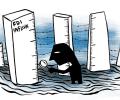
A series of steps taken by the government to promote ease of doing business and liberalisation of foreign direct investment norms have helped India receive record FDI inflows so far this year, and implementation of measures like PM Gati Shakti, single window clearance and GIS-mapped land bank are expected to further push investments in 2022. Notwithstanding the global slowdown and the COVID-19 pandemic, total foreign direct investments into India rose to a record $81.72 billion in 2020-21. During April-July this fiscal, FDI (foreign direct investment) into the country increased by 62 per cent to $27.37 billion.

PowerGrid was the top gainer in the Sensex pack, rallying over 4 per cent, followed by NTPC, UltraTech Cement, Tech Mahindra, Reliance Industries and IndusInd Bank.

While she primed up spending on infrastructure to create jobs and boost economic activity, Sitharaman did not tinker with income tax slabs or tax rates. Her Budget for the fiscal year beginning April 2022 proposed a massive 35 per cent jump in capital expenditure to Rs 7.5 lakh crore, coupled with rationalisation of customs duty, an extension of time for setting up new manufacturing companies and plans for starting a digital currency and tax crypto assets.

This is the highest any Indian company has been ranked on the Fortune Global 500 list.
Reliance Industries Ltd, the nation's most valuable company, on Thursday said it has raised $4 billion (around Rs 30,000 crore) in debt through the largest ever foreign currency bond issuance by an Indian entity. The oil-to-telecom conglomerate plans to use the proceeds of the three tranche issues to retire existing borrowings. The issue was "nearly 3 times oversubscribed with a peak order book aggregating around $11.5 billion," the company said in a statement. This is the largest ever foreign currency bond transaction in India, eclipsing ONGC Videsh Ltd's $2.2 billion US dollar bonds issue of 2014.

'We don't have any agenda in that, there will be no discrimination against anyone. Constitution will be Gita in that'

Changing tracks helps. But, not taking the beaten path isn't always helpful. This is the story of two of India's biggest privatisations - Air India and Bharat Petroleum (BPCL). Nearly two decades after the last privatisation, a landmark divestment concluded this year when the loss-making national carrier Air India was sold to the Tatas.

Indeed, there were frauds, and the politician-banker-industrialist nexus played a role in the rise of NPAs, but governance issues in Indian banking are far more nuanced and complex, reveals Tamal Bandyopadhyay.

However, that could only be for sectors where 100 per cent FDI is allowed under the automatic route and pose no risk to national security.

The temptation to get into businesses that are hot is perhaps too great for any politician, no matter what his public slogans are. Nehru plunged into hot sectors of his time -- engineering and iron and steel. Modi has plunged into digital payments -- the hot sector of his time, notes Debashis Basu.

British Prime Minister Boris Johnson, who landed in Ahmedabad on Thursday morning on a two-day India visit, was accorded a grand welcome at the airport in Ahmedabad. Soon after, he visited Sabarmati Ashram in the company of Gujarat Chief Minister Bhupesh Patel.

Of the 59 IPOs for which the data is available, 36 IPOs received mega responses of more than 10x (of which, six IPOs more than 100x), while eight IPOs were oversubscribed more than 3x.
While Airtel has hiked the limit to 100 per cent in principle, the company needs to address some issues on overseas investment limits in subsidiaries, before the changes come into effect. Until then, the cap on foreign ownership will remain at 49 per cent under the automatic route.

Although the industry is disappointed with the government decision not to lower spectrum prices at a time telcos are saddled with over Rs 4-trillion debt and an estimated Rs 1.43-trillion licence fee dues, the DCC has relaxed the payment structure to offer some relief to the financially stressed sector.

'He will conduct aerial surveys and take part in review meetings, where aspects of relief and rehabilitation will be discussed,' the PMO said in a tweet on Thursday night. Cyclone Amphan has left 72 people dead and thousands homeless in West Bengal, battering several parts of the state and washing away bridges and swamping low-lying areas.

Driven by a historic IPO boom that saw 63 issuers, led by new-age tech companies, garnering a whopping Rs 1.2 lakh crore ($16.6 billion) from the primary market, investment bankers laughed their way to the bank collecting $1.1 billion in fees in the year just gone by, making it the highest-ever advisory fees collected, says an industry report. At $16.6 billion, the initial public offers (IPO) set a lifetime record in 2021, bettering the previous record of $10.8 billion in 2017 by a wider margin. While the number of IPOs more than doubled from a year ago to 63, the proceeds were more than four-times the amount raised from the same period previous year and the momentum is likely to continue as more IPOs are anticipated next year, with mother of all issues, LIC issue, expected to boost proceeds next year much higher, it said.

The US is set for a geographically limited 5G rollout this Christmas, after a bumper $81 billion spectrum auction earlier this year. Just as the rollout date nears, the US Federal Aviation Administration (FAA) has sounded alarm bells over potentially fatal consequences of 5G interference on aircraft. Similar consequences could apply in India, where 5G spectrum auction is scheduled in January 2022, with the rollout beginning later next year (though reports suggest impending delays).

Before the pandemic hit the world and led to shutdowns, the company had received nearly half a dozen offers. But bidders are now withdrawing. They want to reassess the situation. They want to conserve cash and avoid acquisition.

It is estimated that RCom has been reeling under debt of over Rs 46,000 crore.

The helpline 'KIRAN' (1800-599-0019) was launched by Union Minister for Social Justice and Empowerment Thaawarchand Gehlot. The helpline will offer mental health rehabilitation services with the objective of early screening, first aid, psychological support, distress management, mental well being, promoting positive behaviour and psychological crisis management, the minister said.

Reliance is leveraging the technological change of building a virtualised 5G network which would see the current hardware-dependent networks shift to software-centric platforms.
The National Company Law Tribunal (NCLT) has approved the resolution plan of Twin Star Technologies -- a promoter entity of the Vedanta Resources group -- for the Videocon group. But it has pointed out that the successful resolution applicant is "paying almost nothing" as the amount offered is only 4.15 per cent of total outstanding claim. It noted the hair cut for all the creditors is 95.85 per cent and suggested to both committee of creditors (CoC) and the successful applicant an increase in the payout.
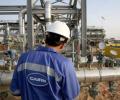
The levy of retrospective tax on the UK's Cairn Energy Plc is a tale of bizarre twists and turns that saw its attached shares being sold in May 2018 amid the passing of the baton from a full-time finance minister to interim one and the talks at the highest level to resolve the dispute, to claims that levy of back taxes was a result of an investigation into Panama Papers leak. The government late last month refunded about Rs 7,900 crore it had collected from selling residual shares of the British firm in its erstwhile India unit, seizing dividend and withholding tax refunds, to settle an eight-year-old dispute that had tarred the country's reputation as an investment destination. But, this did not come about easily. For seven years, the establishment vehemently justified in courts and outside seeking of Rs 10,247 crore in back taxes plus interest and penalty from a firm that gave India its biggest onshore oil discovery.
JioFiber, India's first 100 per cent all-fiber broadband service, will start from 100 Mbps and go all the way up to 1 Gbps. This will propel India to top 5 broadband nations globally.

Tech Mahindra is building 5G use cases with US-based hospitals to help manage devices remotely and eventually manage remote surgeries that will require seamless network connectivity.

The US on Friday issued orders to ban popular Chinese social media apps TikTok and WeChat from Sunday to safeguard national security, weeks after India banned them, saying they were prejudicial to sovereignty, integrity and security of the country.

The 61-year-old, who was administered the oath of office by Jammu and Kashmir High Court Chief Justice Gita Mittal at a simple function in the Raj Bhavan, also said he wants to accelerate development in the union territory, carved out of the erstwhile state of Jammu and Kashmir last year.

Prime Minister Narendra Modi on Friday said production linked incentive (PLI) scheme, which is aimed at boosting domestic manufacturing and exports, is expected to increase the country's production by $520 billion in the next five years. Addressing a webinar on PLI scheme, organised by Department of Industry and International Trade (DPIIT) and NITI Aayog, through video conference, Modi said the government is continuously carrying out reforms to boost domestic manufacturing. In this year's Budget, about Rs 2 lakh crore was earmarked for the PLI scheme for the next five years and "there is an expectation that the scheme would result in increasing the production by about $520 billion in the next five years", he said. He added that there is also an expectation that the current workforce in the sectors, which will avail the benefits of the PLI scheme, will be doubled and job creation will also increase.

The latest ad, done by O&M again, Vodafone's ad agency, shows two engineers tinkering away in a dimly-lit highway tunnel.
 © 2026 Rediff.com - Advertise with us - Disclaimer - Privacy Policy - Sitemap - Feedback - About us - Terms of use - Grievances